Service
24/7 Nationwide
Insurance Direct

Decomposition & Odor Recovery.

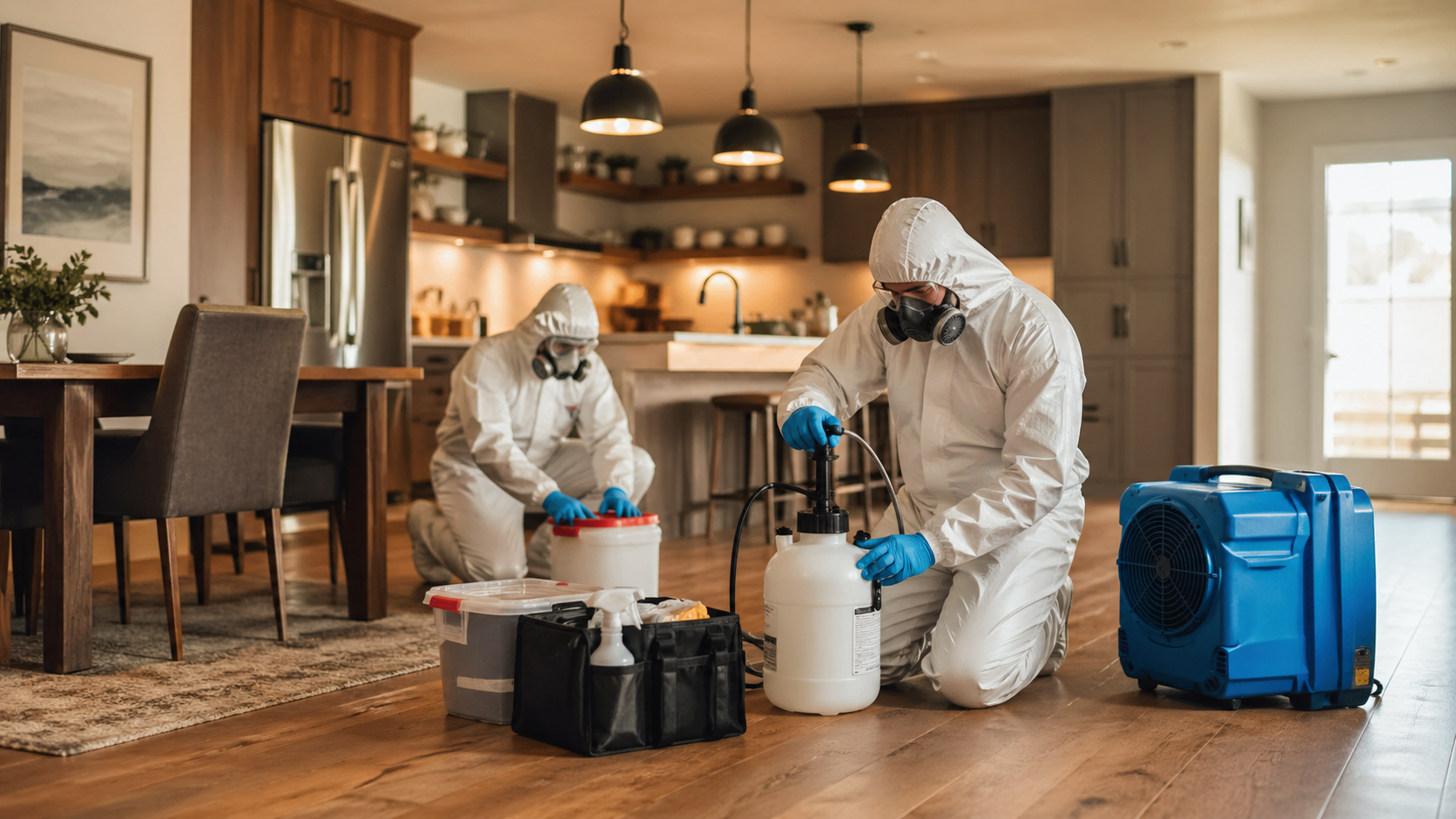
Long-elapsed scenes are technically the hardest. Odor is not perfume to be covered — it is a molecule lodged in porous material. We use hydroxyl and ozone in stages, with thermal fogging where structure permits, and we do not call it done until our own technicians cannot detect it.

Why odor returns — and how we make it not

When a scene is left untreated for days or weeks, decomposition releases volatile organic compounds (VOCs) — putrescine, cadaverine, hydrogen sulfide, methanethiol — that bond to porous materials at the molecular level. Drywall, carpet, padding, subfloor, fabric furniture, even paint will continue to emit these compounds for months or years if not properly remediated.

Air fresheners and surface cleaners do not address this. They mask the smell for a few hours, after which it returns at the same intensity. The only effective remediation is molecular: oxidation through hydroxyl radicals and ozone, thermal fog penetration into porous substrates, and physical removal of materials beyond saturation.

Our protocol runs in stages, with verification at each stage by trained technicians whose nose is the calibration instrument. We do not declare the work complete until we cannot detect anything ourselves — and we issue written clearance to that effect.
What's included

Every line item below is part of the standard scope. We don't add charges that weren't on the written estimate.

  1. 01

    Source removal

    Any saturated material — fabric, padding, drywall, subfloor — removed and replaced.

  2. 02

    Hydroxyl treatment

    Hydroxyl generator runs in the affected space for 24–72 hours; safe to occupy, very slow.

  3. 03

    Ozone treatment

    Higher-intensity oxidation; the building must be unoccupied during treatment but completes faster.

  4. 04

    Thermal fogging

    Heated solution penetrates porous materials where ozone cannot reach. Used in walls and HVAC.

  5. 05

    HVAC line decontamination

    Ductwork and air handlers are inspected and treated; condenser coils cleaned if affected.

  6. 06

    Soft-goods evaluation

    Fabric furniture, mattresses, soft furnishings tested and either treated, salvaged or disposed.

  7. 07

    Sealing where required

    Some surfaces (raw studs, untreated subfloor) get an oil-based primer-sealer to lock in any residual.

  8. 08

     Written clearance

    We sign off only when we cannot detect anything. You get that in writing.

When you should call

Call us if a scene has been undiscovered for more than 24 hours, if previous cleaning has not eliminated odor, if a property is being prepared for sale or lease and odor is detectable, or if HVAC has carried odor into other parts of a building.

Time matters. The longer porous materials sit untreated, the deeper the molecular bond — and the more aggressive the protocol required. Calling us early keeps the cost lower and the home livable sooner.

What does it cost?

Decomposition and odor recovery ranges from $3,000 for a small contained room to $40,000+ for a long-elapsed full-house scene with HVAC and structural saturation. Cost is driven by elapsed time, materials affected and reconstruction.

Insurance covers most of these scenes; we bill direct and write the documentation in language adjusters need to approve quickly.

Get a free written estimate

Get a free written estimate

FAQ

Common questions about decomposition & odor recovery.

Can odor go through the walls?

Yes. VOCs travel through HVAC ductwork, electrical conduit, and porous wall materials. We test the entire affected building, not just the room of origin.

How do you know it's gone?

Trained-nose verification. Olfactory testing is more sensitive than any instrument we have for VOC detection at the levels humans find offensive. We bring a second technician for independent confirmation before clearance.

Will my furniture have to be thrown out?

Often, but not always. Fabric, leather and soft furnishings near the source usually need to go. Solid wood, glass, metal and sealed surfaces almost always survive treatment. We test and document each item before disposal.

Can you treat one apartment in a multi-unit building?

Yes. We isolate the affected unit with negative pressure, treat the unit and any shared HVAC, and document for the building's management or HOA. Adjacent units usually need at most an inspection.

More services

Other ways we help — same on-call team.

Need help right now?

Don't wait. We pick up in under 12 seconds.

Tap to call — 24/7
855·555·0184
Call 24/7 · Avg pickup 11s
866·375·0829